

What you need to know and the risks to monitor
Motor vehicles are an audit risk
The ATO actively data-matches motor registry records, insurance, and even toll data to find cars registered to businesses that aren’t lodging FBT returns.
Hot spots drawing attention:
- Treating cars as 100% business use when they’re used or available for private use.
- Missing or invalid logbooks (or ones that aren’t representative).
- Blanketly treating “eligible commercial vehicles” (utes, vans) as exempt without checking whether private use is truly limited.
The domino effect of getting it wrong:
- FBT for multiple years,
Payroll tax and WorkCover premium impacts (grossed-up benefits are taxable wages)
What is a motor vehicle fringe benefit?
A car fringe benefit arises when an employer provides a motor vehicle to an employee (and/or its associates) and it is used, or available for use, for private purposes. “Available” includes situations like the car being garaged at or near the employee’s home, even if it isn’t driven privately.
Exemptions:
The main exemption is the limited-private-use exemption for eligible work vehicles: private use must be essentially home-to-work and otherwise minor, infrequent or irregular.
The ATOs Public Compliance Guidance (PCG 2018/3) provides conditions to reference and understand how and when exemptions apply.
Understanding the difference between Car vs Non-car
Car (for FBT): A motor vehicle designed to carry less than 1 tonne or fewer than 9 passengers (includes EVs).
Non-car (residual benefit): Vehicles with 1 tonne or more payload or 9+ passengers (e.g., larger vans, buses) are not car fringe benefits; they’re residual benefits. These are usually valued under Operating Cost (logbook) or, where private use is genuinely limited, a cents-per-km approach.
💡Tip: For dual-cab utes/pickups, check payload by deducting ~68 kg per seat to see if it really carries >1 tonne; this test often decides whether it’s treated as a car or a non-car.
Download our checklist to help you manage your Motor Vehicle FBT risk.

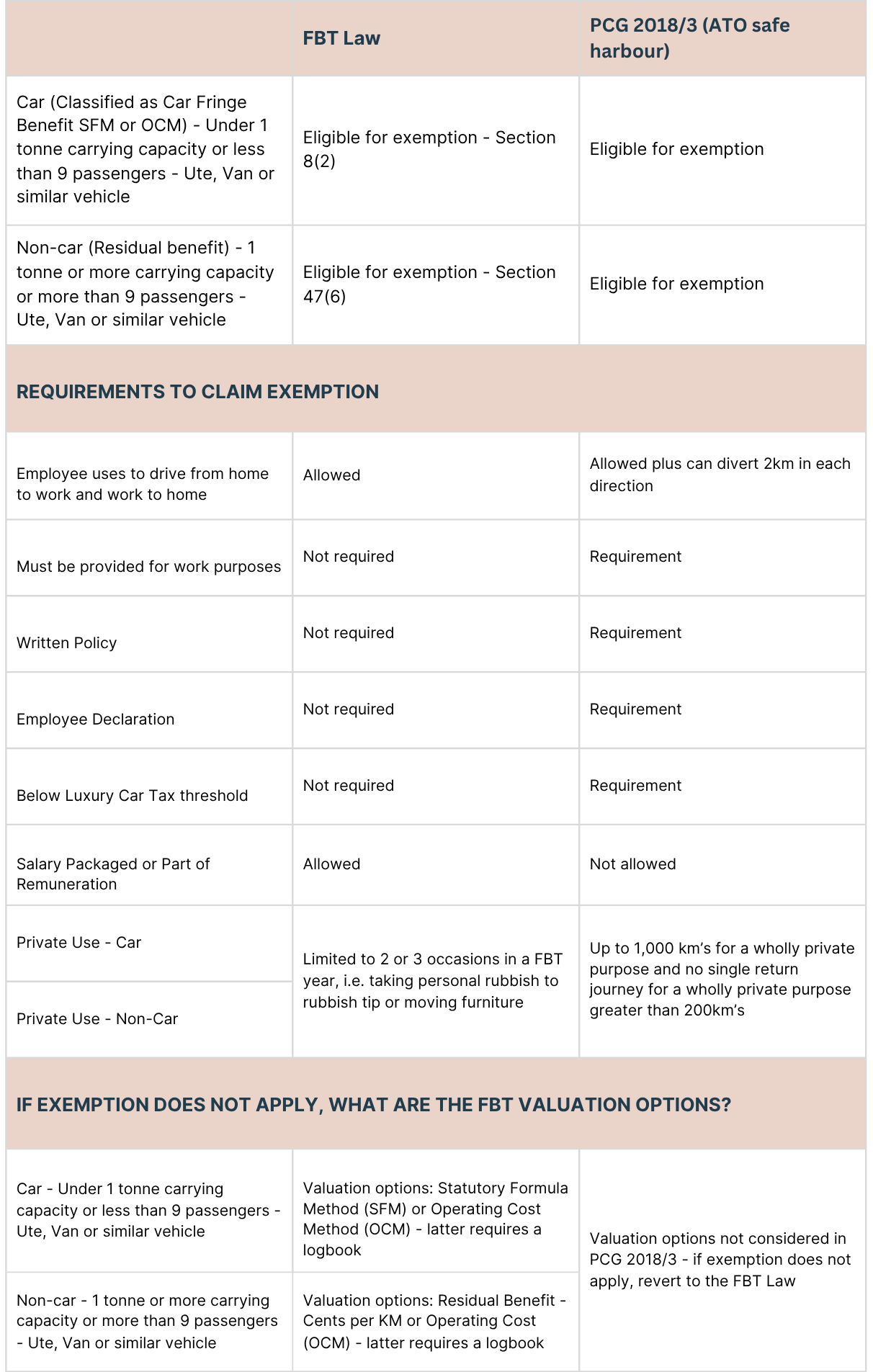
This table summarises the application of FBT for a car vs a non-car and the requirements in claiming an exemption.